Guide06
Ozone for sewage and effluent treatment (STP and ETP)
Where ozone fits in a treatment plant, what it can do for colour, odour and microbes, and why testing comes first.
5 min read
Where ozone fits
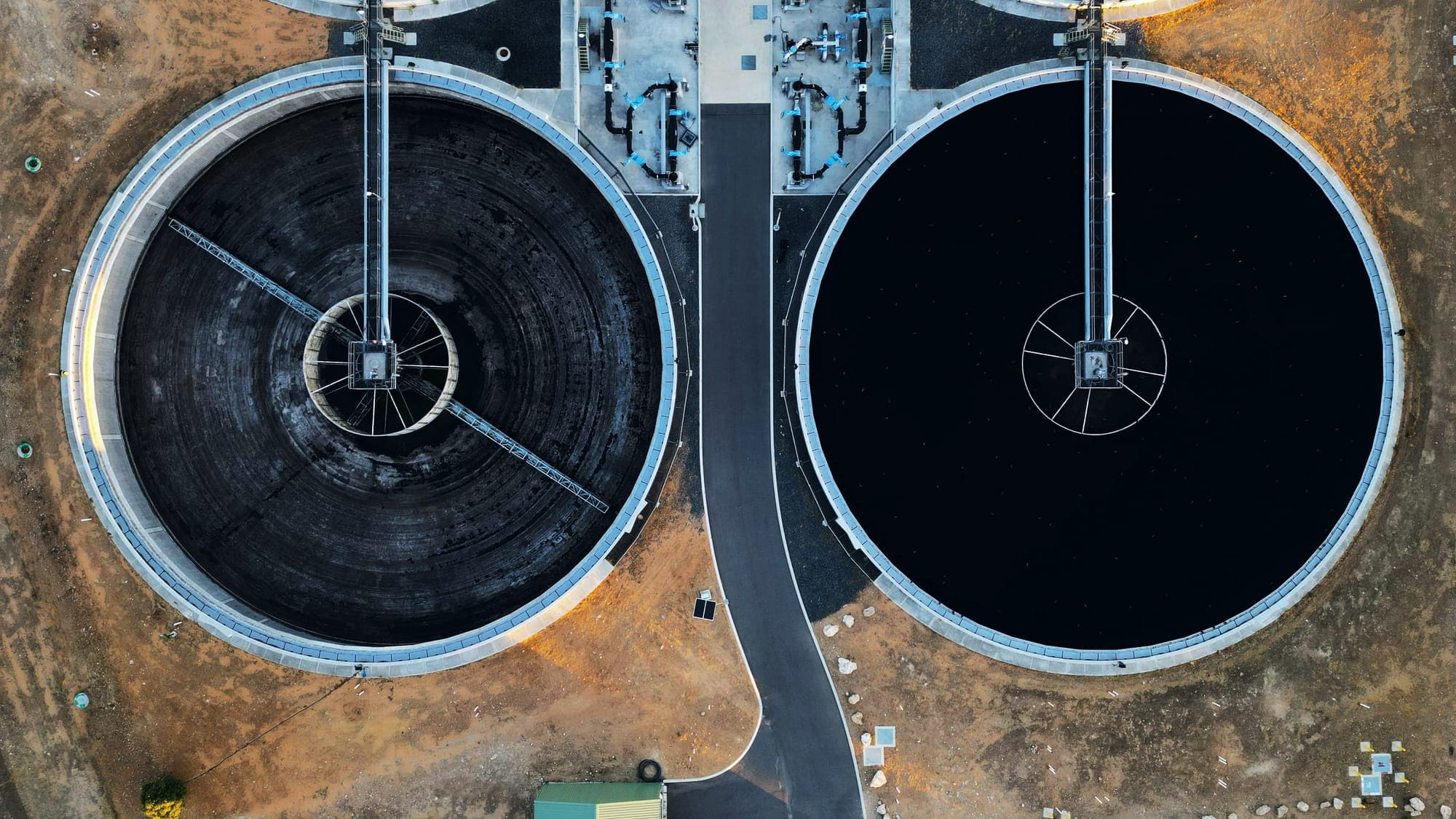
In sewage and effluent treatment, ozone is usually added as a polishing step after biological treatment, or ahead of reuse. It oxidises compounds that biological treatment leaves behind and disinfects the treated water.
What it does
Ozone is a strong oxidiser, so it acts on several problems at once:
- Disinfection of bacteria and viruses
- Colour and odour removal
- Breaking down organic compounds that resist other treatment
- No chlorinated by-products from the ozone step itself
Advanced oxidation
Some effluents need more than ozone alone. Our research and development team works on ozone and advanced oxidation processes, developing treatment schemes for industrial and municipal effluents.
Why every effluent is tested first
Effluents differ enormously in how much ozone they consume. We start with laboratory testing and treatability studies, move to pilot or on-site trials where needed, and only then design and size the system.
The system around the generator
A typical plant combines an ozone generator or Skid System, often on oxygen feed, with injection, mixing, contact time and an ozone destructor for off-gas.